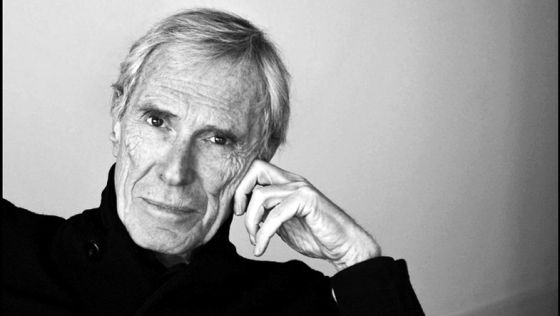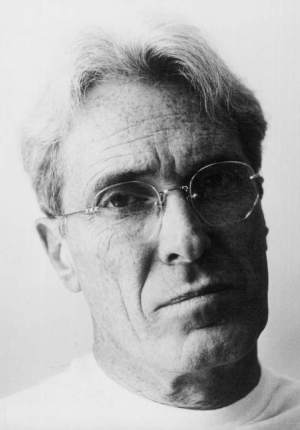
Εμφάνιση αναρτήσεων με ετικέτα Mark Strand. Εμφάνιση όλων των αναρτήσεων

Τρίτη 17 Μαρτίου 2020

Mark Strand: Always


for Charles Simic


Always so late in the day
In their rumpled clothes, sitting
Around a table lit by a single bulb,
The great forgetters were hard at work.
They tilted their heads to one side, closing their eyes.
Then a house disappeared, and a man in his yard
With all his flowers in a row.
The great forgetters wrinkled their brows.
Then Florida went and San Francisco
Where tugs and barges leave
Small gleaming scars across the Bay.
One of the great forgetters struck a match.
Gone were the harps of beaded lights
That vault the rivers of New York.
Another filled his glass
And that was it for crowds at evening
Under sulphur yellow streetlamps coming on.
And afterward Bulgaria was gone, and then Japan.
“Where will it stop?” one of them said.
“Such difficult work, pursuing the fate
Of everything known,” said another.
“Down to the last stone,” said a third,
“And only the cold zero of perfection
Left for the imagination.” And gone
Were North and South America,
And gone as well the moon.
Another yawned, another gazed at the window:
No grass, no trees…
The blaze of promise everywhere.

Σάββατο 3 Αυγούστου 2019

Mark Strand: The Sleep


There is the sleep of my tongue
speaking a language I can never remember—
words that enter the sleep of words
once they are spoken.

There is the sleep of one moment
inside the next, lengthening the night,
and the sleep of the window
turning the tall sleep of trees into glass.

The sleep of novels as they are read is soundless
like the sleep of dresses on the warm bodies of women.
And the sleep of thunder gathering dust on the sunny days
and the sleep of ashes long after.

The sleep of wind has been known to fill the sky.
The long sleep of air locked in the lungs of the dead.
The sleep of a room with someone inside it.
Even the wooden sleep of the moon is possible

And there is the sleep that demands I lie down
and be fitted to the dark that comes upon me
like another skin in which I shall never be found,
out of which I shall never appear.

Mark Strand: Moon


Open the book of evening to the page
where the moon, always the moon, appears
between two clouds, moving so slowly that hours
will seem to have passed before you reach the next page
where the moon, now brighter, lowers a path
to lead you away from what you have known
into those places where what you had wished for happens,
its lone syllable like a sentence poised
at the edge of sense, waiting for you to say its name
once more as you lift your eyes from the page
and close the book, still feeling what it was like
to dwell in that light, that sudden paradise of sound.

Mark Strand: The Ghost Ship


Through the crowded street
It floats

Its vague
Tonnage like wind.

It glides
Through the sadness

Of slums
To the outlying fields.

Slowly,
Now by an ox,

Now by a windmill,
It moves.

Passing
At night like a dream

Of death,
it cannot be heard;

under the stars
It steals.

Its crew
And passengers stare;

Whiter than bone,
Their eyes

Do not
Turn or close.

Mark Strand: The Dead


The graves grow deeper.
The dead are more dead each night.

Under the elms and the rain of leaves,
The graves grow deeper.

The dark folds of the wind
Cover the ground. The night is cold.

The leaves are swept against the stones.
The dead are more dead each night.

A starless dark embraces them.
Their faces dim.

We cannot remember them
Clearly enough. We never will.

Τρίτη 4 Ιουνίου 2019

Mark Strand: Eating Poetry


Ink runs from the corners of my mouth.
There is no happiness like mine.
I have been eating poetry.

The librarian does not believe what she sees.
Her eyes are sad
and she walks with her hands in her dress.

The poems are gone.
The light is dim.
The dogs are on the basement stairs and coming up.

Their eyeballs roll,
their blond legs burn like brush.
The poor librarian begins to stamp her feet and weep.

She does not understand.
When I get on my knees and lick her hand,
she screams.

I am a new man.
I snarl at her and bark.
I romp with joy in the bookish dark.

Σάββατο 16 Δεκεμβρίου 2017

Mark Strand: The Everyday Enchantment of Music


Mark Strand & Octavio Paz

A rough sound was polished until it became a smoother sound, which was polished until it became music. Then the music was polished until it became the memory of a night in Venice when tears of the sea fell from the Bridge of Sighs, which in turn was polished until it ceased to be and in its place stood the empty home of a heart in trouble. Then suddenly there was sun and the music came back and traffic was moving and off in the distance, at the edge of the city, a long line of clouds appeared, and there was thunder, which, however menacing, would become music, and the memory of what happened after Venice would begin, and what happened after the home of the troubled heart broke in two would also begin.

Mark Strand: Mystery and Solitude in Topeka


Afternoon darkens into evening. A man falls deeper and deeper into the slow spiral of sleep, into the drift of it, the length of it, through what feels like mist, and comes at last to an open door through which he passes without knowing why, then again without knowing why goes to a room where he sits and waits while the room seems to close around him and the dark is darker than any he has known, and he feels something forming within him without being sure what it is, its hold on him growing, as if a story were about to unfold, in which two characters, Pleasure and Pain, commit the same crime, the one that is his, that he will confess to again and again, until it means nothing.


Mark Strand: Futility in Key West


I was stretched out on the couch, about to doze off, when I imagined a small figure asleep on a couch identical to mine. “Wake up, little man, wake up,” I cried. “The one you’re waiting for is rising from the sea, wrapped in spume, and soon will come ashore. Beneath her feet the melancholy garden will turn bright green and the breezes will be light as babies’ breath. Wake up, before this creature of the deep is gone and everything goes blank as sleep.” How hard I try to wake the little man, how hard he sleeps. And the one who rose from the sea, her moment gone, how hard she has become—how hard those burning eyes, that burning hair.

Mark Strand: The Mysterious Arrival of an Unusual Letter


It had been a long day at the office and a long ride back to the small apartment where I lived. When I got there I flicked on the light and saw on the table an envelope with my name on it. Where was the clock? Where was the calendar? The handwriting was my father’s, but he had been dead for forty years. As one might, I began to think that maybe, just maybe, he was alive, living a secret life somewhere nearby. How else to explain the envelope? To steady myself, I sat down, opened it, and pulled out the letter. “Dear Son,” was the way it began. “Dear Son” and then nothing.

Mark Strand: Man and Camel


On the eve of my fortieth birthday
I sat on the porch having a smoke
when out of the blue a man and a camel
happened by. Neither uttered a sound
at first, but as they drifted up the street
and out of town the two of them began to sing.
Yet what they sang is still a mystery to me—
the words were indistinct and the tune
too ornamental to recall. Into the desert
they went and as they went their voices
rose as one above the sifting sound
of windblown sand. The wonder of their singing,
its elusive blend of man and camel, seemed
an ideal image for all uncommon couples.
Was this the night that I had waited for
so long? I wanted to believe it was,
but just as they were vanishing, the man
and camel ceased to sing, and galloped
back to town. They stood before my porch,
staring up at me with beady eyes, and said:
“You ruined it. You ruined it forever.”

Mark Strand: Keeping Things Whole


In a field
I am the absence
of field.
This is
always the case.
Wherever I am
I am what is missing.

When I walk
I part the air
and always
the air moves in 
to fill the spaces
where my body’s been.

We all have reasons
for moving.
I move
to keep things whole.

Mark Strand: The End


Not every man knows what he shall sing at the end,
Watching the pier as the ship sails away, or what it will seem like
When he’s held by the sea’s roar, motionless, there at the end,
Or what he shall hope for once it is clear that he’ll never go back.

When the time has passed to prune the rose or caress the cat,
When the sunset torching the lawn and the full moon icing it down
No longer appear, not every man knows what he’ll discover instead.
When the weight of the past leans against nothing, and the sky

Is no more than remembered light, and the stories of cirrus
And cumulus come to a close, and all the birds are suspended in flight,
Not every man knows what is waiting for him, or what he shall sing
When the ship he is on slips into darkness, there at the end.

Mark Strand: From the Long Sad Party


Someone was saying
something about shadows covering the field, about
how things pass, how one sleeps towards morning
and the morning goes.

Someone was saying
how the wind dies down but comes back,
how shells are the coffins of wind
but the weather continues.

It was a long night
and someone said something about the moon shedding its
   white
on the cold field, that there was nothing ahead
but more of the same.

Someone mentioned
a city she had been in before the war, a room with two
   candles
against a wall, someone dancing, someone watching.
We began to believe

the night would not end.
Someone was saying the music was over and no one had
   noticed.
Then someone said something about the planets, about the
   stars,
how small they were, how far away.